There’s never been a better time to be an Australian shopper with online spending a record $82.6 billion in 2025, up nearly 14% in a year.1 For Australian retailers however, it’s tough going. Nearly four out of 10 parcels now come from global marketplaces2 and those players have reset what “normal” looks like: same-day delivery, transparent tracking and easy returns. Miss that bar and customers move on. In fact, 44% will abandon a purchase if delivery takes more than 2 days.3
At the Online Retailer Conference in Sydney, Gary Starr, Executive General Manager Parcel, Post and eCommerce Services at Australia Post discussed how Australian retailers can not only meet those expectations but exceed them by playing to their unique strengths.
Partnering for speed
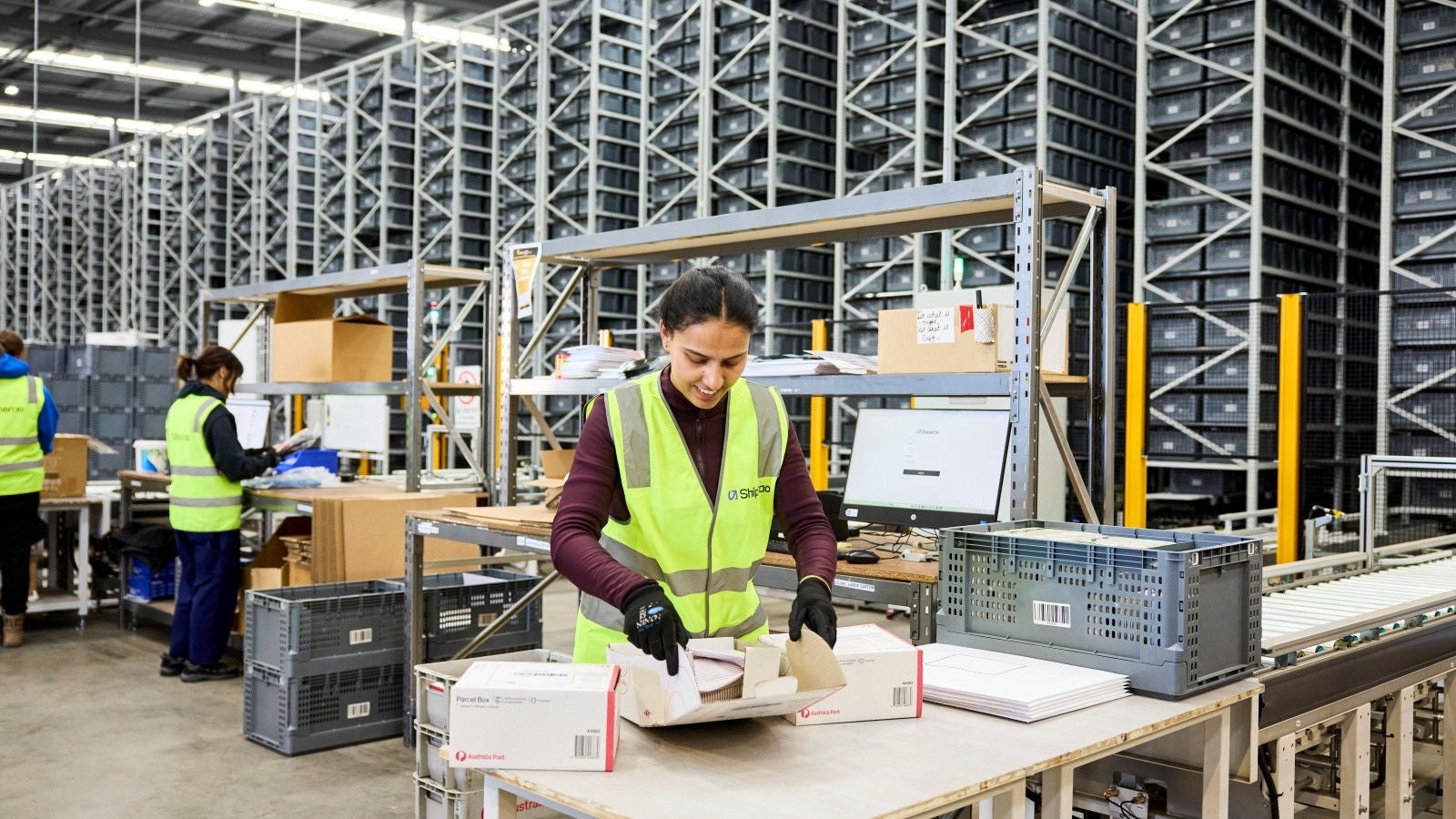
To achieve world-class delivery speeds, smart fulfilment becomes a real advantage. A partner like Shiperoo runs automated centres that pick, pack and ship in as little as an hour. You don’t need to hand over all your stock or buy a single robot: place your top sellers there and you’ve got the core of next-day, or even same-day delivery. Home brand Hommey is already scaling this way, without building the capability in-house.
For instant delivery, an on-demand platform like Rendr hails a nearby courier to take a parcel straight to the customer’s door. Chemist Warehouse uses this to deliver from its stores with a 2-hour promise and an average delivery time of just 50 minutes.
Today’s winning retailers aren’t building it all themselves, they’re plugging into the right ecosystem, putting capabilities once reserved for the biggest players within reach.
Providing delivery options and certainty
Speed isn’t everything, however. For many customers, cost matters more. 75% prioritise free shipping over faster shipping4 and around 70% choose the cheapest option when given the choice.4 So the winning model isn’t “fast for everything”, it’s choice: offering premium speed for when it counts, like a last-minute gift, and low-cost or free shipping options for everything else.
Certainty matters, too. Customers want to know where their order is at any point in time. 77% say real-time tracking is essential,5 along with the ability to redirect or reschedule in a few taps.
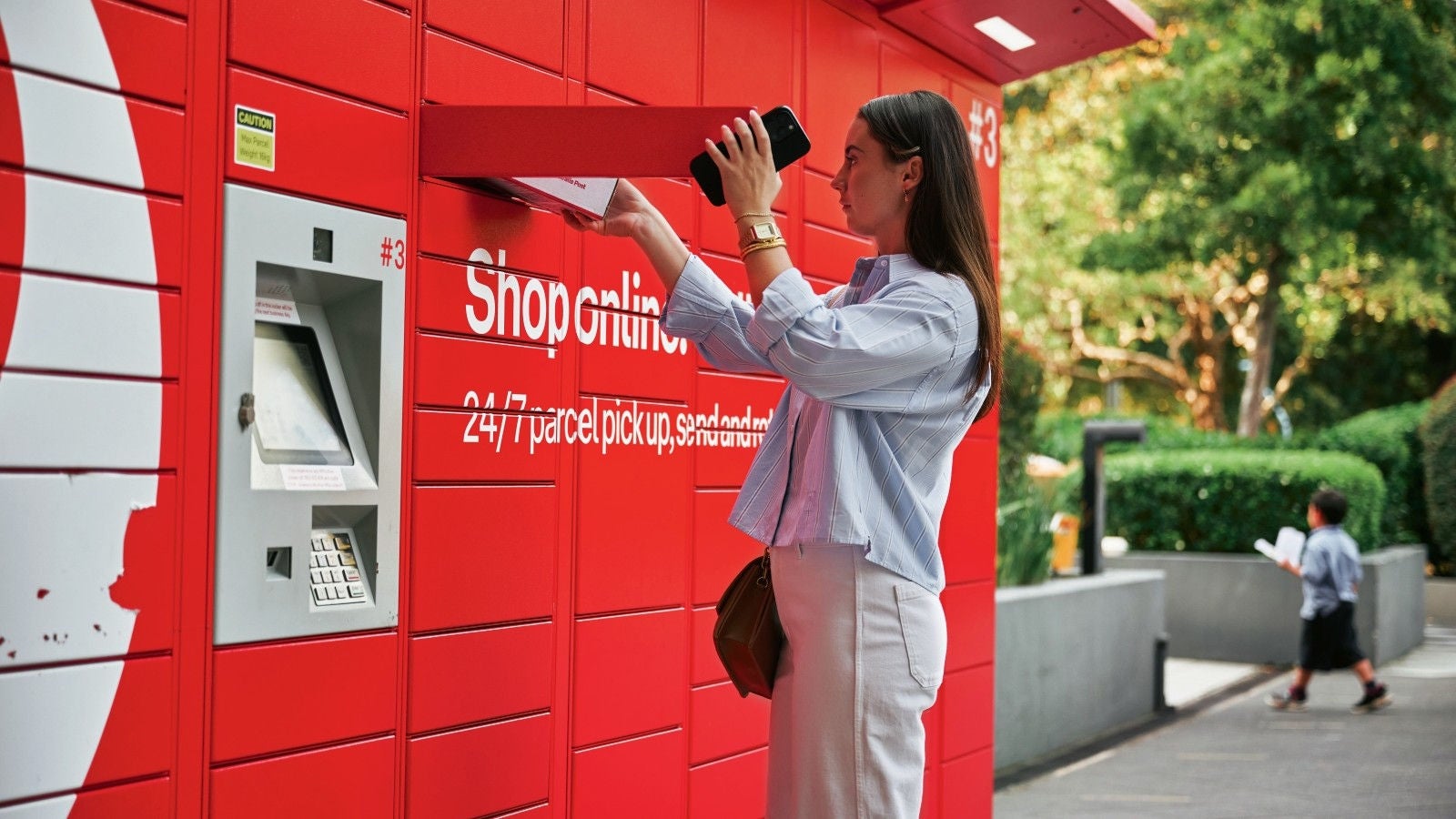
Not all customers can be home for a delivery, or a driver can’t access their building. Fashion brand THE ICONIC was able to improve checkout conversion, reduce cart abandonment and boost Net Promoter Score by offering Parcel Locker delivery at checkout, giving customers the option of picking up a parcel when it suits them.
Making returns easy
Returns are the most underestimated part of eCommerce and one of the biggest opportunities. 71% of shoppers say a poor returns experience makes them less likely to buy from a retailer again.6 You could get everything else right but frustrate them at the return and lose them as a customer.
Flip it around and returns become a real advantage. 82% of shoppers rank free, easy returns as a top priority6 and 92% are more likely to shop again with a brand that makes it simple.7
That’s why 24/7 Parcel Locker returns matter. Customers can drop off their parcel whenever it suits them, at no cost, with instant confirmation their item is on its way. Retailers can use the Australia Post Returns Portal to enable this offering for customers.
The payoff: more confidence at checkout for customers and lower operational overheads for your business.
Lean into your Aussie advantage
Meeting these expectations levels the playing field. To pull ahead, Australian retailers should lean into what the global players can’t easily copy: your community and local presence, as well as the enablers of technology and AI.
Content and community
Trust is everything, and one of the best ways to build it is through content your customers create. Around 84% of shoppers say reviews and social posts influence what they buy8 and 60% of Australians now discover new products on social media.9 This is where local brands shine.
Activewear label LSKD built a 95,000-strong community group and turned its website into a feed of shoppable, TikTok-style videos. The result: conversion up 24% and average order value up more than 50%.10 It worked because it didn’t feel like marketing, it felt like fun.
Physical presence
Your shopfront and face-to-face connection are something no online-only competitor can replicate. It shows in the numbers. Brands with strong omnichannel engagement retain about 89% of customers,11 versus just 33% for those with weak strategies.11 Turn your stores into micro-fulfilment hubs, invite customers to click-and-collect and play to the relationships you already have. You know your community and you can look your customers in the eye.

Technology and AI
AI is about to reshape how people shop. By the end of the decade, around 30% of online transactions could be influenced by an AI shopping assistant.1 To get ready, make your product data machine-readable, lead with structured detail like materials and fit, and keep investing in reviews. Increasingly, that’s what AI systems trust.
Think of it as the next evolution of SEO. Tea brand T2 used AI to rebuild its entire Shopify catalogue in weeks and built a digital twin of its distribution centre to test changes before spending.
Two moves to win
The rules of retail have changed but Australian businesses can absolutely win. First, meet customer expectations by leaning on the right ecosystem partners to offer delivery options and certainty. Second, double down on what makes you uniquely you: your voice, your community and your local presence.
MyPost Business can help with your parcel sending
From automating shipping label creation to booking parcel pickups, MyPost Business is here to help eCommerce businesses save time and money every send.
1 Australia Post eCommerce Report 2026
2 CommBank iQ Generations report, June 2026
3 Australia Post eCommerce Data (April 2026)
4 FedEx (via Shopify), E-commerce Consumer Preferences 2025. (2025)
5 SOTI, The Road Ahead: Driving Digital Transformation in Transport & Logistics. (Inside Small Business, Nov 2024)
6 Happy Returns & NRF, 2025 Retail Returns Landscape (Dec 2025)
7 Shippit, State of Shipping 2025 (July 2025)
8 Nielsen Consumer Trust Study (2026)
9 Australia Post eCommerce Report 2026 (via Small Business Connections, Apr 2026)
10 https://www.gotolstoy.com/customer-stories/lskd
11 Aberdeen Group (as cited in Harvard Business Review, 2017)

Writer and Editor
Ben Maher
Ben Maher writes about eCommerce, business growth and logistics for Australian SMBs. His research-informed content has helped merchants improve their customer experience, acquisition and operational efficiencies, with a focus on how technology applications can improve business outcomes. His work draws on B2B industry insights, producing practical guidance for Australian SMBs looking to grow.