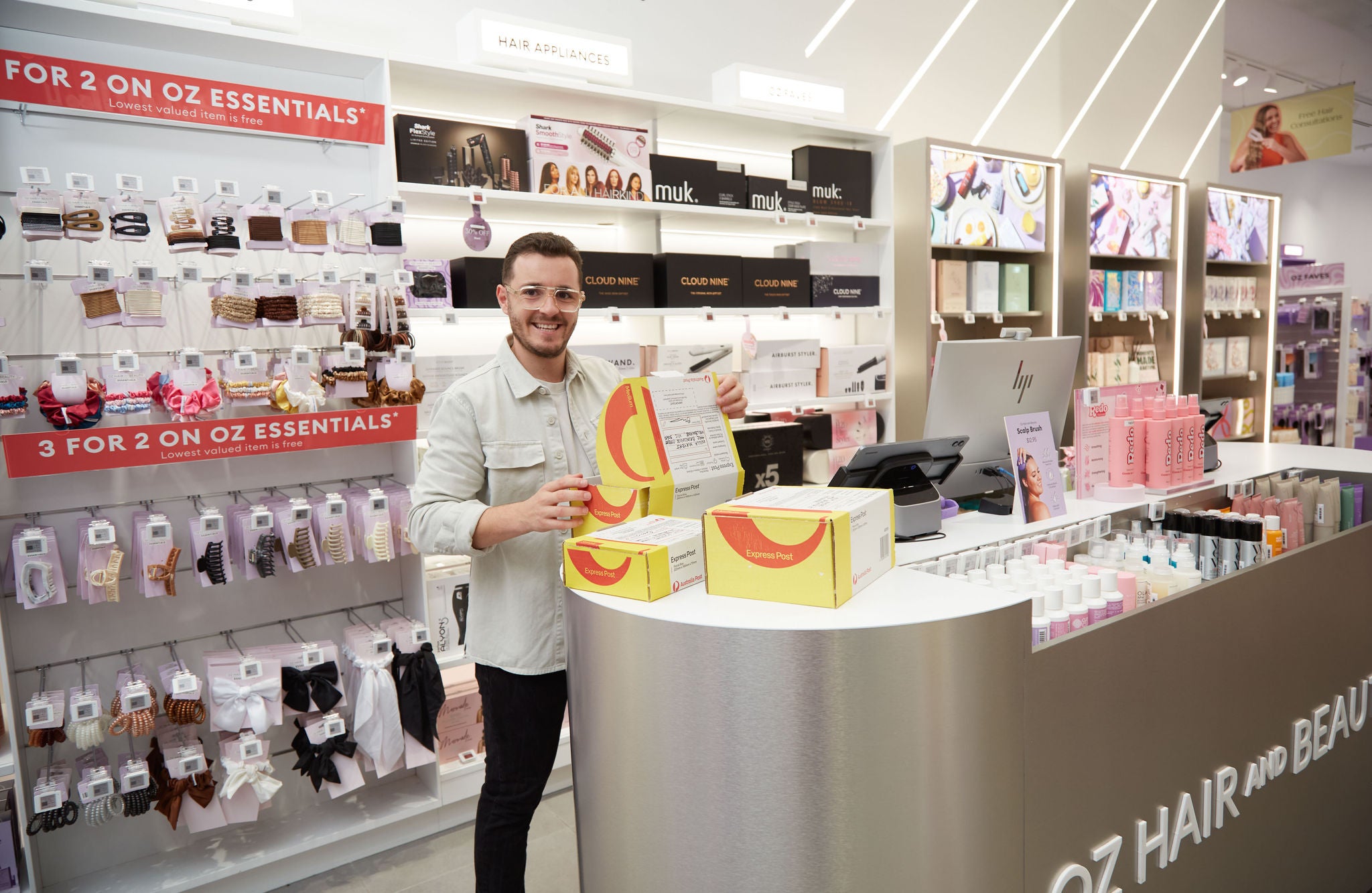
Starting a business but unsure where to start with parcel sending? We spoke with Wesley Berryman, Postal Leader at Burnley Post Shop, about his experience helping start-ups establish good delivery practices. Wesley shares helpful tips and advice as well as some of the common mistakes new businesses can easily avoid.
What are common sending mistakes you see new small businesses make?
Something I often see is new businesses using random packaging instead of looking at the most cost-effective packaging for what they’re sending. Nobody starts a business because they love choosing packaging! But a short conversation with us can save you a lot of money. The other common mistake is not charging customers enough when quoting postage fees.
What should businesses know before they start sending regularly?
I always recommend new businesses come and talk to us at the Post Office, or to their Account Manager, before they start sending to understand how Australia Post can help them. For example, there’s a MyPost Business platform which can make their sending much easier. There are also bulk packaging discounts and different requirements for sending parcels express or overseas.
What’s a simple thing a business can do to make delivery feel more professional?
This one’s really simple but makes a big difference. Always make sure the parcels are correctly labelled with the customer’s full name, address and, wherever possible, the customer’s mobile number. That way, customers can track their parcel as it moves through our parcel network.
What are signs that a business has outgrown its current sending process?
When I notice a customer is bringing in a lot of parcels or making multiple trips a day, it’s a sure sign the business is growing. That’s the time for them to have a discussion with their Account Manager to see how Australia Post can help. For example, they might go onto an eParcel Contract or arrange for parcel pick-ups.
What delivery habits should small businesses build early, before orders grow?
It sounds obvious but give yourself plenty of time to lodge your parcels before the Post Office’s daily collection cut off. Also, parcel tracking details should be shared with your customers from the outset. Giving customers visibility of their parcel delivery improves their experience and reduces calls to your support team.
Save money with MyPost Business
With smart sending tools and no eligibility criteria, MyPost Business saves you time while your parcels can earn you savings.
Writer and Editor
Ben Maher writes about eCommerce, business growth and logistics for Australian SMBs. His research-informed content has helped merchants improve their customer experience, acquisition and operational efficiencies, with a focus on how technology applications can improve business outcomes. His work draws on B2B industry insights, producing practical guidance for Australian SMBs looking to grow.
Recommended blogs
-
Blog | 13 July 2026Hear from Shaun Broughton, Managing Director, APAC and Japan at Shopify to find out how you can create a great checkout experience for your eCommerce store. -
Kylie Radford, Morrison, Co-founder and Creative Director.Blog | 02 June 2025International shipping: a success story
Are you looking to expand your business overseas, but unsure how other Australian businesses successfully navigate international shipping? -
Blog | 06 February 2026Ask me anything about … Australia Post and Shopify integration
How Sage Avenue transformed its shipping workflow with the latest Australia Post and Shopify integration, saving time, cutting manual tasks and boosting customer trust. -
Blog | 04 June 2025Ask me anything about … next day delivery
Oz Hair and Beauty share why offering next day delivery is a “no brainer” that contributes to their reputation as a top eCommerce retailer. -
Blog | 30 August 2026Ask me anything about … Parcel Lockers
We asked leading retailers, Oz Hair and Beauty and THE ICONIC, to share their experiences with offering Parcel Locker delivery to shoppers. From implementation to real-life business results and what their customers think of the offering, they break down what worked, what they learned.